
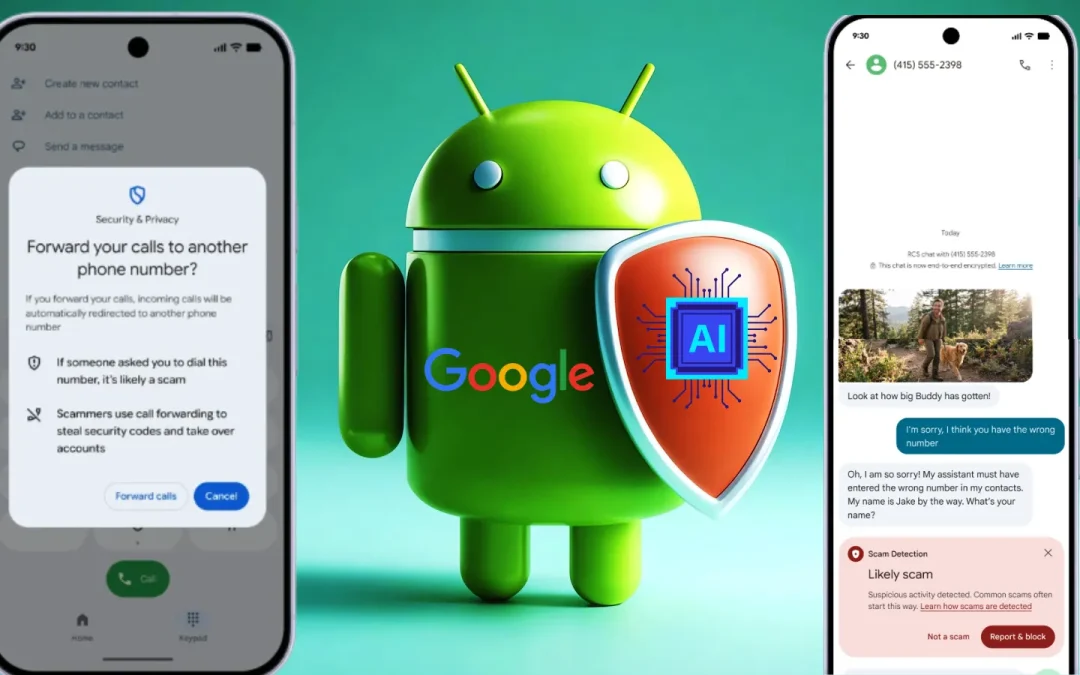
Google has announced a new set of Android security protections designed to stop mobile scams across calls, text messages, chat apps, web links, and account verification codes.
The update comes as criminals increasingly use spoofed phone numbers, fake bank alerts, phishing pages, remote screen sharing, and AI-generated voices to trick users into giving up money or login details.
Google said its existing AI-powered scam detection tools in Phone by Google and Google Messages already identify more than five million suspected scam calls and texts each month.
The new protections focus on preventing users from reaching the most dangerous stage of a scam. Instead of only blocking known malicious links or spam numbers.
Android will use a mix of on-device AI, cloud-based analysis, privacy protections, and real-time checks to identify suspicious behavior before victims share passwords, payment data, or one-time passcodes.
A key addition is an opt-in Enhanced Protection mode in Google Messages. Google said the setting will roll out in the coming weeks and will activate stronger protections for complex messaging scams.
This includes expanded Scam Detection using Google’s Private AI Compute platform, which allows Gemini models to review the context of a conversation with an unknown sender.
Google Unveils New Android AI Protections
The aim is to spot slow-moving social engineering scams where criminals build trust over several messages before sending a fraudulent request or link. Google said the analysis occurs in an encrypted environment that Google employees cannot access.
Enhanced Protection will also strengthen link checks in Google Messages. Scammers frequently create new phishing domains that have not yet been added to threat blocklists, which can make standard URL filtering less effective.
Google said Gemini Nano, its on-device AI model, will combine real-time web signals with local analysis to assess unfamiliar links before a user opens them.

Android will also show redesigned warnings for links from numbers not saved in the user’s contacts. This provides an extra checkpoint before users visit a potential phishing page.
The company is also expanding scam alerts from Pixel devices to a wider Android ecosystem. Scam Detection in chat notifications can flag suspicious messages from supported chat apps directly in the notification panel, allowing users to see a warning before opening the message.
Google is working with Android device makers to bring the on-device feature to hundreds of millions of additional users later this year.
Google’s update also targets phone-based social engineering scams, particularly cases where criminals persuade victims to share their screen or redirect incoming calls.
Android will now automatically hide login fields and payment screens during active screen-sharing sessions in Chrome and Android WebView. The Protection is designed to stop fraudsters from viewing passwords, card details, and other sensitive information while guiding a victim through a fake support or banking process.

Another major safeguard addresses OTP theft through call forwarding. Threat actors may trick a user into entering a call-forwarding code, redirecting incoming calls containing verification codes to a criminal-controlled number.
Android will block apps from silently enabling call forwarding in the background and warn users before a manually entered MMI forwarding code takes effect.
Security teams can also review related account takeover risks and prevention steps in Cyber Security News coverage of OTP bypass and MFA phishing campaigns and mobile banking malware.
Google is also expanding verified financial calls, a feature built with banks including Banco do Brasil and Itaú Unibanco. The system checks whether the bank’s official app actually initiated a call claiming to come from a bank.

If verification fails, Android can end the call and alert the user. Google said the feature has blocked more than three million spoofed calls involving the two Brazilian banks since its June launch.
The announcement shows mobile security shifting from simple spam filtering to behavior-based fraud prevention. Users should still avoid sharing passwords, card information, recovery codes, or OTPs over calls and messages, even when the caller appears legitimate.