
Ransomware can turn one careless click into a business-wide emergency. An incident at QNET shows how quickly that risk can grow when attackers use trusted Windows tools to launch a second stage of an intrusion.
The attack began after a user opened a malicious file, likely delivered through email or a browser download.
It launched mshta.exe, a legitimate Windows utility, which contacted attacker-controlled infrastructure to collect a remote payload and prepare persistent activity.
Microsoft analysts noted that the operation used a living-off-the-land method, meaning it relied on a built-in tool rather than an obvious malware program.
That approach can blend into normal system activity and give attackers time to steal credentials, establish persistence, or move into other systems.
The incident remained limited to one workstation, but the potential impact was serious. Ransomware operators depend on fast access to more machines, backups, and sensitive data, making early containment central to stopping encryption and disruption.
Microsoft said in a report shared with Cyber Security News (CSN) that two independent detections fired at 09:23:20 UTC.
Microsoft Defender Stops QNET Ransomware Attack
One flagged suspicious command activity connected to RunMRU registry use, while a correlation engine judged the combined behavior to be malicious rather than normal administration.
At 09:25:02 UTC, the automated response process assessed the attack as active code execution on a single endpoint, with no signs of lateral movement.
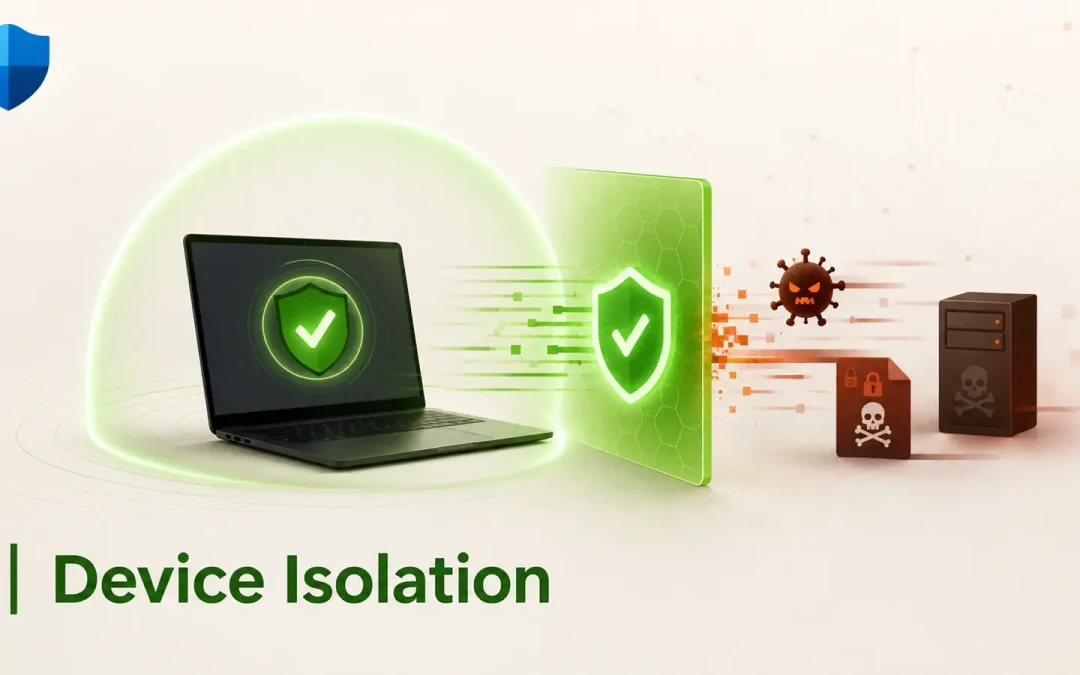
It selected device isolation, began the IsolateDevice playbook at 09:25:16, and completed the action twelve seconds later.
The final time from first detection to isolation was 128 seconds. The affected device lost internal and external network access, except for security-management traffic, ending its communication with the attacker-controlled service and leaving an auditable timeline.
This matters because an endpoint can become a launch point even before attackers reach other systems.
As explained in coverage of automatic device isolation safeguards, targeted containment can preserve security visibility while removing the network path used for command-and-control, data theft, and further ransomware deployment.
Microsoft reported no additional payload download, persistence, or lateral-movement attempt after isolation.
The mshta.exe process was cut off at the network layer, and no security operations center action was needed during the disruption window, allowing analysts to concentrate on investigation and recovery.
Why speed and preparation matter
The QNET case reflects a familiar ransomware pattern: a user-facing lure, a trusted tool used in an unexpected way, and a rapid attempt to turn a local foothold into wider access.
Comparable multi-stage malware delivery tactics often use social engineering and normal-looking system functions to evade suspicion.
For defenders, the lesson is not that every alert needs an automatic shutdown of a machine.
Isolation decisions need high confidence, clear operational control, and an option to restore access safely after the device has been investigated, cleaned, and monitored for repeat activity.
Organizations should reduce the chance of the first step succeeding by training staff to question unexpected files, limiting unnecessary scripting and proxy-execution tools, and monitoring unusual mshta.exe activity.
They should also maintain tested backups, apply timely updates, and ensure response teams know who can isolate a device and how critical services will continue.
The source report recommends enabling real-time protection capabilities and reviewing how they can be activated in an organization.
It also shows why response plans should pair endpoint containment with checks on the affected user account, since isolating only the device or only the identity can leave gaps.
Security teams can use the incident containment response lessons from earlier ransomware cases to rehearse those decisions before an alert arrives.
A short containment window is valuable only when it is followed by careful root-cause analysis, credential review, eradication, and a measured return to service.
At QNET, the window was short enough to prevent an attack from becoming a broader ransomware event.
The case is a reminder that prevention matters, but the ability to interrupt a confirmed intrusion quickly can determine whether one compromised computer becomes an organization-wide crisis for all involved.