
“`html
.webp?w=1600&resize=1600,900&ssl=1)
WhatsApp has launched a new Android update via the Google Play Beta Program, elevating the version to 2.26.7.8. This update indicates that WhatsApp is actively working on an optional password feature for accounts aimed at providing an extra layer of protection atop the current two-factor authentication (2FA) system.
The platform already provides two-factor authentication as an optional security enhancement, which mandates users to input a secondary PIN after successfully registering their mobile number.
Previously, in the WhatsApp beta for Android update 2.23.24.10, the service introduced the capability to safeguard accounts using a registered email address, enabling users to swiftly regain access when unable to receive the 6-digit SMS verification code, such as when a SIM card is temporarily unavailable.
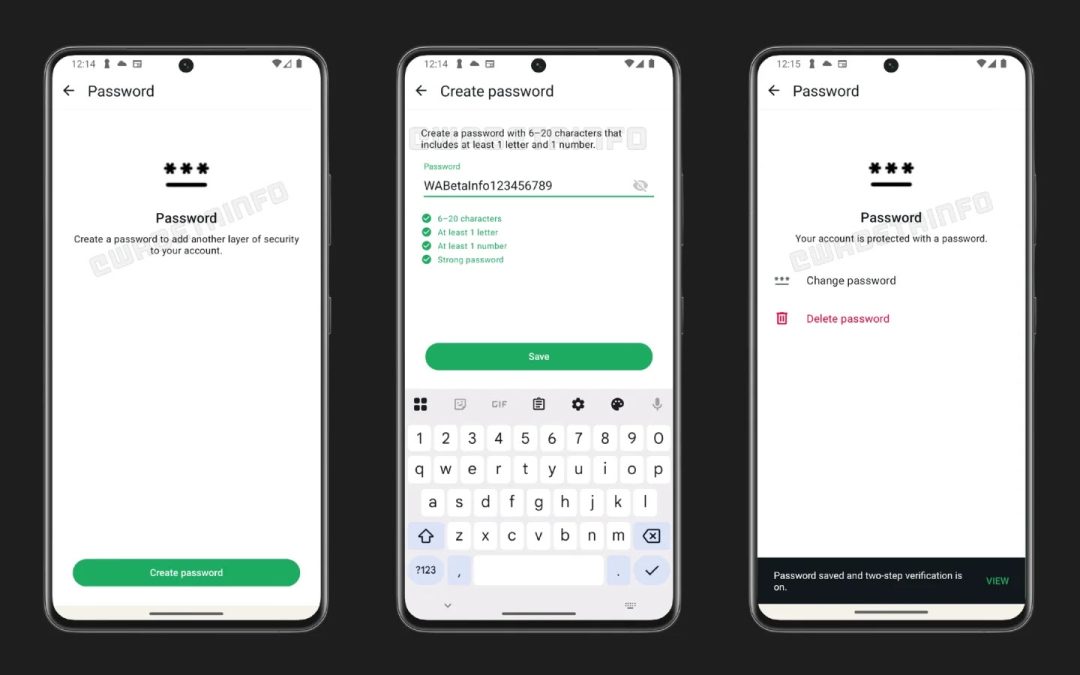
Continuing these advancements, Wabetainfo noted that WhatsApp is now developing an account password feature, serving as a third layer of authentication alongside the existing verification process.
The aim is to enhance account security by making unauthorized access considerably more challenging, particularly in circumstances involving SIM swapping or compromised devices.
How the Account Password Functions
The account password is an alphanumeric sequence, spanning between 6 and 20 characters, that must encompass at least one letter and one digit.

Once established, WhatsApp will assess the selected password and specify if it is sufficiently robust, steering users toward more secure options. Notably, users have the ability to modify or delete their password at any moment, granting them comprehensive authority over their security settings.

The feature weaves into the login process at the final phase. If a user has established an account password but has not set up two-factor authentication, WhatsApp will request the password immediately following the entry of the 6-digit SMS code.
If both 2FA and the account password are activated, users must first provide the two-factor authentication PIN and subsequently the account password, creating a tri-factor barrier against unauthorized intrusion.
This signifies that even if a malicious entity secures both the SMS verification code and the 2FA PIN through methods like SIM swapping, they would still face a blockade without the account password.
Configuring an account password is entirely voluntary, allowing users to determine if they desire this additional safeguard. This aligns with WhatsApp’s practice regarding two-factor authentication, which is also optional and not compulsory.
The new password functionality does not supplant existing security systems; rather, it fortifies them by introducing an authentication layer solely known to the account owner.
The account password feature is currently under development, as per Wabetainfo, and has yet to be publicly released. WhatsApp is still fine-tuning how passwords can optimally secure accounts against unauthorized access, and once testing concludes, the feature will be incrementally deployed to users.
With account takeover threats, including SIM swapping and phishing, remaining a continual risk, this feature marks a crucial advancement in WhatsApp’s persistent endeavor to strengthen account authentication and lessen the likelihood of unauthorized access among its more than two billion global users.

“`